The Prove Goes On: A Wonky Panettone and the Lesson of a Cold British Kitchen
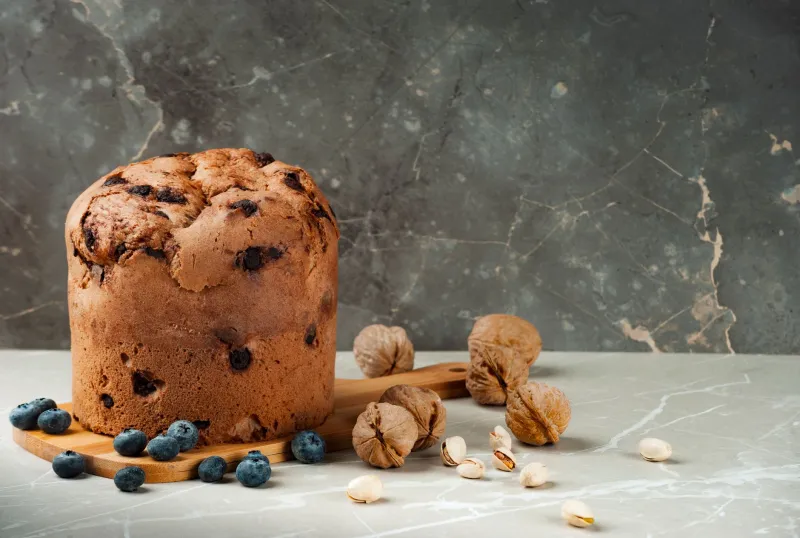
I baked my first panettone last week. It rose unevenly, leaned left, and had a top that looked like a hat someone had sat on. I ate a slice standing up in the kitchen, brushed the crumbs off my jumper, and felt absurdly proud. This is not a story about a perfect Milanese bake. It is a story about butter, patience, a little panic, and what happens when an Italian Christmas bread meets a cold British kitchen.
If you have been put off by photographs of towering, symmetrical panettone wrapped in ribbon, I understand. Those photographs are not the point. The point is that a homemade panettone, even a wonky one, smells like something worth waiting for. And waiting is most of the recipe.
First, the butter and the peel
Panettone is not a cheap bake, and it is not a fast one. It is enriched dough: strong white flour, eggs, sugar, butter, yeast, dried fruit and candied peel. The butter matters. I used a good British salted butter, and next time I will use unsalted so I can control the salt myself. British butter is not a compromise. It is excellent. The flour is where you need to pay attention: use a strong white bread flour, not plain flour, or the dough will give up before the job is done.
The candied peel is the bit that separates a lovely homemade loaf from a disappointing one. Supermarket tubs of mixed peel can be dry, overly sweet and faintly medicinal. I made my own with oranges and lemons, simmering the peel in sugar syrup until it turned glossy and translucent. It took an afternoon. I listened to a podcast and stirred. If you have an Italian deli nearby, buy good candied peel there instead. No shame in that. The point is flavour, not martyrdom.
I also bought proper panettone moulds — the tall paper cases — because a normal cake tin will not give you the height. You will need long skewers too, for cooling the loaf upside down. This sounds dramatic. It is dramatic. It is also necessary, because panettone is so light that it will collapse under its own weight if you leave it upright while warm.
The cold kitchen problem
Here is the thing nobody tells you about baking panettone in Britain in November: your kitchen is probably too cold. My flat is not draughty in a romantic, cottage way. It is just cool. The dough sat in its bowl looking at me like a cat that had no intention of moving.
I proved it in the oven with only the light on. I also tried the microwave trick: boil a kettle, put a mug of hot water in the microwave, shut the door, and leave the dough inside. That worked better. The airing cupboard is another good British solution, provided you cover the bowl properly and do not forget about it among the towels.
What I learned is that panettone does not care about the clock. It cares about warmth and time. My first prove took five hours. I kept checking it, which is the baking equivalent of poking a sleeping person to ask if they are asleep. Eventually I left it alone. It rose. Not perfectly. Enough.
The panic, and the oven door
I opened the oven door. Of course I did. Twenty minutes in, I wanted to see. The loaf sank slightly in the middle and never quite recovered its confidence. It still tasted good, but it taught me the lesson properly: every time you open the oven door, you lose heat and gain doubt.
The second attempt — because yes, there was a second attempt — I resisted. I set a timer, walked away, and made a cup of tea I did not need. The loaf browned slowly, the kitchen smelled of butter and orange, and I did not touch the door until the timer told me to. That loaf was still wonky. It was also taller, lighter, and closer to the panettone I had in my head.
What British ingredients taught me
This is not a story about Italian ingredients being better. It is a story about learning to work with what you have. British butter is superb. British eggs are superb. British flour can be superb if you choose the right bag. The candied peel I made myself was better than any tub I have bought here, because I could taste the fruit underneath the sugar.
The one thing I could not hurry was the patience. Panettone is a dough that asks you to slow down. It asks you to wait for the rise, to trust the warmth, to leave the oven door shut. In an Italian kitchen, that patience might be second nature. In a British kitchen in November, with the heating on a timer and the light fading by four, it feels like a small act of rebellion.
The wonky loaf is the point
I wrapped half of that first panettone in parchment and gave it to a neighbour. She sent me a message later saying she had toasted a slice and eaten it with butter. That, to me, is the whole thing. A homemade panettone is not a competition entry. It is a generous, slightly imperfect loaf that says someone stood in a cold kitchen and waited.
If you try it this Christmas, expect a wonky top. Expect a moment of panic. Expect to open the oven door when you swore you would not. Then expect the smell to fill the house and the first slice to taste like something you made with your own hands. That is worth more than symmetry.
And if it collapses? Cut it into thick slices, toast them, and serve them with mascarpone and a little jam. No one will ask what shape it was. They will ask for another slice.