The Sunday Pot: Ragù, Roast and the Case for Doing Less
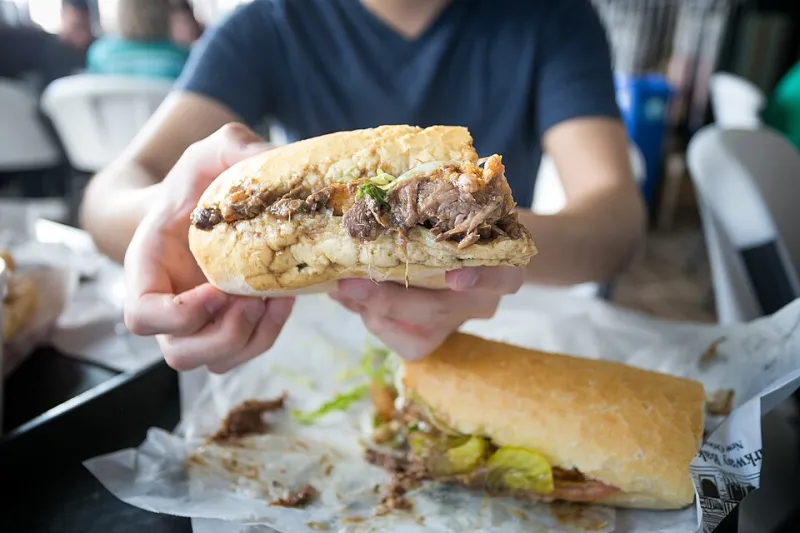
Photo: City Foodsters, CC BY 2.0, via Wikimedia Commons
Sunday, in my family, was never a roast. It was a pot. My grandmother would set it on the stove sometime after Mass, and by four o'clock the kitchen smelled of tomato, bay and something deeper — beef, usually, or a piece of pork with the rind still on. Nobody called it a sauce. It was just Sunday.
Then I moved to Britain, and discovered that Sunday here has its own pot, its own timing, its own smell. The roast. And for a long time I thought the two had nothing to say to each other. One is Italian and slow and slightly messy; the other is British and precise and served at two o'clock sharp, with a jug of gravy and an argument about whether the potatoes have had enough time.
I was wrong. They are cousins, these two Sundays. They just express patience in different accents.
Two Pots, One Sunday
Think about what actually happens in each kitchen. The roast is an act of timing: oven on at eleven, meat in at twelve, rest for twenty minutes, potatoes in at the right moment, gravy made in the pan while everyone is already sitting down. It rewards attention. You cannot wander off.
The ragù is an act of neglect. You brown the meat, build the base, add the tomatoes, then walk away. Two hours later it is better than it was. Four hours later it is better still. It rewards faith.
What both traditions understand, and what a lot of modern cooking quietly forgets, is that a Sunday meal is not really about the food. It is about the shape of the day. The pot gives the day a spine. It gives people a reason to arrive at a certain hour and stay longer than they planned.
What the Ragù Knows About Gravy
Here is the thing that took me years to articulate. British gravy is a finishing gesture. You make it at the end, from the juices, the fat, a spoon of flour, some stock. It is the last flourish — and a good one. A proper gravy can rescue a dry bird and make a plate feel complete.
Italian sauce is an accumulation. The flavour is built in layers, early, and by the time you eat it there is nothing left to add. The pot has already done the work.
Neither approach is superior. But they teach different lessons. Gravy teaches you to pay attention at the end. Ragù teaches you to pay attention at the beginning, then trust the pot. If you cook both regularly, you end up doing both: build flavour early, then finish with a small, generous gesture. That is not fusion. That is just good cooking.
What the Roast Does Better
The roast has one thing the ragù often lacks: contrast. Crackling against soft potato. A crisp edge against something yielding. A sharp horseradish against rich meat. Ragù, left to itself, can turn into a bowl of the same texture, however delicious.
So borrow the idea. Serve the ragù with something that crackles — a roast potato, a piece of grilled bread rubbed with garlic, a scatter of crisp fried rosemary. The Italians do this too, of course, with polenta or grilled polenta cakes. The British do it with roasties. Both are correct.
A British Beef Ragù for a Slow Sunday
This is the pot I make when the day is long and the weather is doing something British outside. It serves six, or four with leftovers for Monday. Beef shin is the cut to ask for — cheap, full of collagen, and it collapses into something silky after three hours. Ask the butcher to cut it into large chunks, or use braising steak if that is what the supermarket has.
You will need:
- 1kg beef shin, cut into big chunks
- 2 tbsp olive oil
- 100g smoked pancetta or streaky bacon, chopped
- 1 onion, 1 carrot, 1 celery stick, all finely chopped
- 3 garlic cloves, sliced
- 2 tbsp tomato purée
- 150ml red wine or a small bottle of stout
- 2 x 400g tins plum tomatoes, crushed by hand
- 300ml beef stock
- 1 bay leaf, a parmesan rind if you have one, salt and pepper
Method: Pat the beef dry and season it well. Heat the oil in a heavy casserole and brown the meat in batches until it is properly dark — do not rush this, it is where half the flavour comes from. Set the meat aside. Add the pancetta and let it render, then the onion, carrot and celery. Cook gently for ten minutes until soft and sweet. Add the garlic and tomato purée and stir for a minute. Pour in the wine and let it bubble away. Return the beef, add the tomatoes, stock, bay and parmesan rind. Bring to a simmer, cover, and put in a low oven at 150C for two and a half to three hours, or leave it on the lowest hob ring with a heat diffuser if you have one.
When it is ready, the meat should fall apart under a spoon and the sauce should be thick enough to coat pasta. Fish out the bay and the rind. Taste and season.
Building a Table That Satisfies Both Traditions
A few rules I have settled on, after many Sundays and a few disagreements:
One pot is the star. Do not try to serve a full roast and a full ragù. Pick the pot. If you are feeding traditionalists, roast a chicken — small, well seasoned, nothing fancy — and let the ragù be the pasta course. If the table is more Italian, skip the bird and let the ragù carry the day.
Keep the sides familiar. Roast potatoes, greens with lemon, good bread. These belong to both traditions in spirit, even if the details differ. Nobody has ever complained about roast potatoes at an Italian table.
Two sauces are allowed. A jug of proper gravy for the chicken, the ragù for the pasta. This is not confusion; it is generosity. The Italians have never had a problem with more than one sauce on the table.
Do not call it fusion. Fusion implies a gimmick. This is just two families sitting at the same table, which is what Sunday is for.
The ragù will be better on Monday. That is not a failure. That is the point of a Sunday pot — it keeps feeding people after the plates are cleared. And if there is a little gravy left in the jug, so much the better.