Small, Sturdy, Shareable: Italian Christmas Biscuits That Survive the 8:15
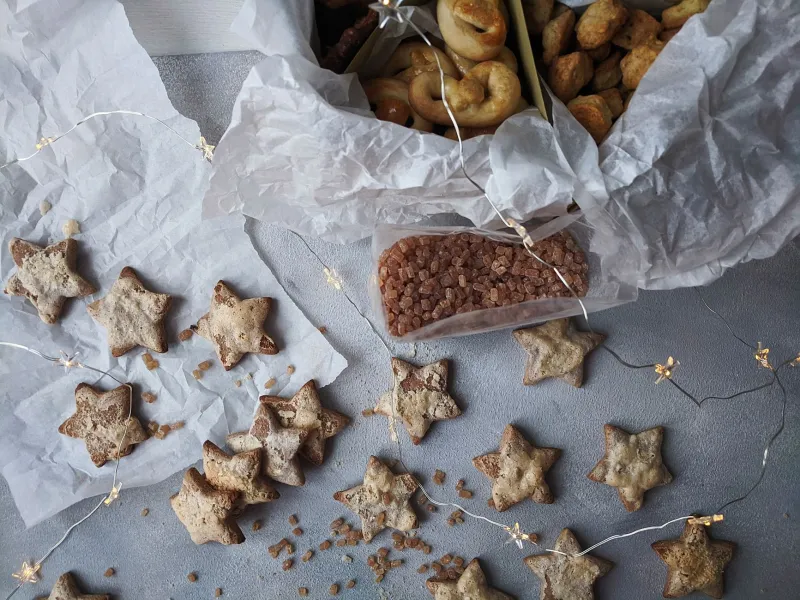
Every December, the office biscuit tin arrives. It is usually plastic, usually purple, usually emptied by the second week with a small sad pile of the ones nobody likes left at the bottom like sedimentary rock.
I am not here to fight the tin. I am here to add to it. Because there is a version of December sharing that costs less, tastes better, and doesn't require anybody to stand around a kitchen worktop with a bread knife wondering whether the fruit is meant to be that sticky.
Italian Christmas biscuits. Not a panettone, not a pandoro, not a boxed thing from the Italian deli that costs the same as a train ticket. Just three small batches of biscuits, made in an ordinary British kitchen, from ordinary British supermarket shelves.
Why biscuits beat a cake in an office
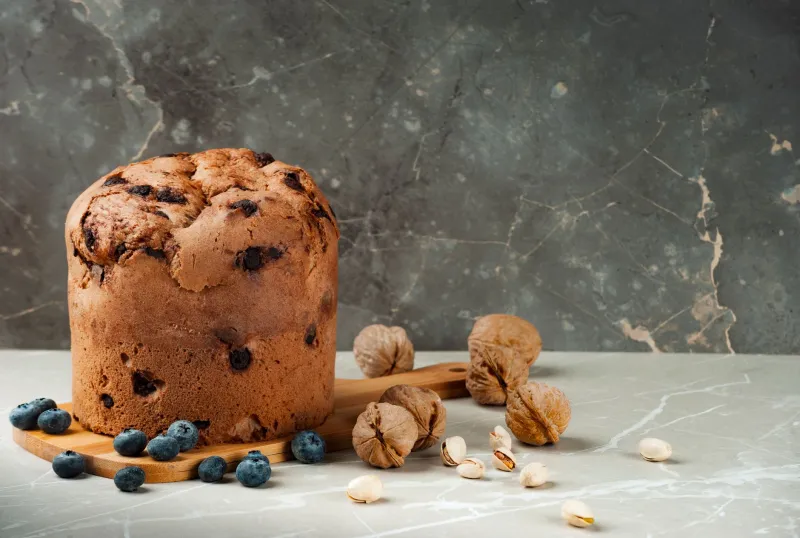
A panettone is a commitment. It wants a board, a knife, a moment, and — crucially — a person to be responsible for it. It also comes with opinions. Someone will say it's dry. Someone will say their nonna's was better. Someone will ask, quite sincerely, whether you're supposed to toast it.
Biscuits ask for nothing. They sit in a tin. They are already portioned. A person can take one, say thank you, and get back to their emails. That is the whole transaction.
They also travel beautifully, which matters in a country where the commute to work can involve a bus, a train, a drizzle and a fifteen-minute walk with the tin under your arm.
The roster: three biscuits, three jobs
You do not need twelve varieties. Twelve varieties is a bakery. Three is a person with good taste and a spare Sunday.
Cantuccini — the one that keeps
These are the hard almond biscuits you have probably dunked into a small glass of something sweet at the end of a restaurant meal. They are essentially flour, sugar, egg and whole almonds, baked twice until they are dry enough to survive a nuclear winter.
For one decent batch: 250g plain flour, 180g caster sugar, 2 eggs, 150g whole almonds, a pinch of salt, the zest of a lemon. Mix, shape into two flat logs, bake at 180C fan for about 25 minutes, cool, slice on the diagonal, then bake again at 150C fan for 12–15 minutes until crisp.
Use the whole almonds from the baking aisle. Do not hunt for blanched, skinned, heritage ones. The skin is where the flavour is, and anyway they look better.
Brutti ma buoni — the one that surprises people
Translated, it means 'ugly but good', which is the most honest name any biscuit has ever been given. They are rough, crackled, hazelnut-heavy little lumps with a chewy centre and a crisp shell.
Roughly: 200g hazelnuts, 150g caster sugar, 2 egg whites, a pinch of salt, a drop of vanilla. Toast and roughly chop the nuts. Whisk the whites with the sugar until stiff, fold in the nuts, then spoon rough dollops onto a lined tray and bake at 160C fan for 20–25 minutes until cracked and dry on top.
They look like something went slightly wrong. That is the point. Make them last, because they are always the first to go.
Frollini al limone — the one for the cautious
Not every colleague wants a hazelnut situation at eleven in the morning. A lemon shortbread is the diplomatic option: 200g soft butter, 100g caster sugar, 300g plain flour, the zest of two lemons, a pinch of salt, one egg yolk. Bring it together, chill for half an hour, roll, cut into rounds, bake at 170C fan for 12–14 minutes until pale gold at the edges.
Do not overbake them. A shortbread that has gone brown is a shortbread that has gone bitter.
Timing, or how not to lose a weekend
You do not have to do all three at once. Spread them across three Sundays in December and the whole thing feels like a pleasant habit rather than a production line.
Start with the cantuccini — they improve for a few days and keep for weeks. Do the shortbread in the middle of the month; the dough also freezes well in a log, so you can slice and bake on demand. Leave the brutti ma buoni until the last week, because they are at their best within a few days and it's nice for people to receive them fresh.
One practical note: bake in the evening if you can. A hot oven and a cold British kitchen window do good things to biscuits, and the smell of almonds at nine o'clock is its own reward.
Storage and the great flavour-creep problem
Keep each type in its own tin, or at least its own bag inside a tin, layered with greaseproof paper. Cantuccini will happily lend their almond flavour to a lemon shortbread given half a chance, and while that sounds charming it is actually just confusing.
In a cool cupboard, cantuccini are good for three weeks, shortbread for two, brutti ma buoni for about ten days. Do not put them in the fridge. Do not put them near the radiator. Do not store them in the same tin as anything savoury, and I say that as someone who once learned this the hard way with a batch of taralli.
Packaging without the performance
Small cellophane bags or greaseproof paper parcels, tied with string, are plenty. Write on the label what's inside and what's in it — nuts, gluten, dairy, egg — because somebody at work will need to know, and asking is awkward for them, not for you.
Stack four or five cantuccini in a bag and you have a gift. Six brutti ma buoni and you have a gift somebody will talk about. Two shortbread and it looks like an apology, so give four.
The etiquette of the office tin
A few rules I have settled on, mostly by getting them wrong.
Label the tin. An unlabelled tub of homemade biscuits in a communal kitchen is a health-and-safety rumour waiting to happen.
Don't make a speech. Put it down, say 'help yourself', walk away. The biscuits will do the talking.
Keep a nut-free batch separate, clearly labelled, and put it somewhere different. It costs you one extra bake and it means everybody gets something.
Don't expect the tin back. Consider it a donation to the office ecosystem.
And don't bring them in on the last day before the break, when half the floor has already gone and the other half is in a meeting. Bring them early. Bring them on a Tuesday. Tuesdays are when people need biscuits most.
The treaty, then: you bring something small and genuinely good, made with your own hands and a bag of supermarket almonds, and the office gets a few minutes where nobody is talking about deadlines. That is not a small thing in December.
And if you come home with an empty tin, that is the whole review. Five stars.