The Leaf That Bites Back: Winter Greens Worth Getting Wrong Once
There is a particular kind of sadness to a November desk lunch. The sandwich is fine. The crisps are fine. The handful of pale leaves in the corner of the box, though, is an act of optimism that the season has already defeated. They taste of water and obligation. They were never going to save anybody.
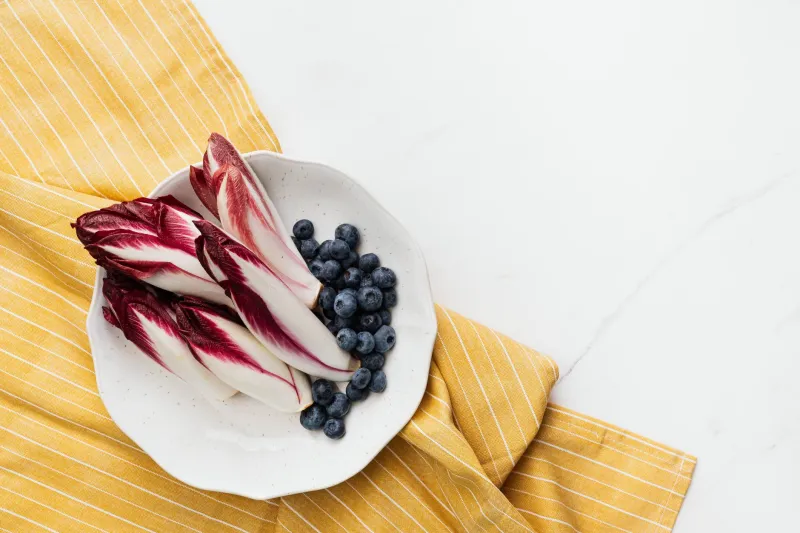
In Italy, the same grey month sends people in the opposite direction. They reach for the leaves that answer back. Chicory with its bitter spine. Radicchio the colour of a bruised church candle. Puntarelle, snipped into curls and drowned in anchovy dressing. These are not ingredients chosen to be inoffensive. They are chosen because they wake the mouth up when the light has gone flat.
Why bitterness makes sense when the sun disappears
Bitterness is not a flaw to be masked. It is a signal. In the depths of winter, when everything else on the plate is soft, sweet or starchy, a bitter leaf cuts through. It resets the palate between mouthfuls of something richer. It makes a bowl of beans taste like a proper meal rather than a punishment.
Italians understand this instinctively. The radicchio of Treviso, the puntarelle of Rome, the catalogna of the south — these are winter foods, not summer ones. They arrive when the body wants warmth and the kitchen has run out of tomatoes. A bitter leaf is what you eat when you need to feel awake at four in the afternoon without another coffee.
British cooks have been slower to come round. We grow excellent chicory here now, and the good greengrocers and farm shops will have red and white heads from late autumn. Supermarkets have improved, too, though you still have to look past the plastic bags of pre-washed rocket. The raw material is there. What's missing is the confidence to treat it as the main event.
Three dressings that make a bag of chicory feel like supper
A bitter leaf needs fat, salt and a little acid. That's the whole theory. What follows are three ways to put it into practice, none of which requires a special trip.
1. The anchovy and olive oil one
Mash two or three anchovy fillets into a few tablespoons of good olive oil with a fork. Add a small squeeze of lemon, plenty of black pepper, and a spoonful of the oil from a jar of something — olives, peppers, whatever is open. Toss with torn chicory leaves and a handful of warm boiled potatoes. The potatoes take the edge off; the anchovy does the rest. This is a lunch that holds its own on a cold day.
2. The mustard and honey one
A teaspoon of Dijon, a teaspoon of runny honey, a tablespoon of cider vinegar, four tablespoons of rapeseed or olive oil. Shake it in a jar. It sounds sweet, but the mustard keeps it honest. Use it on shredded radicchio with thinly sliced apple and a few toasted walnuts. A crumble of blue cheese on top turns it into something you could serve to people you like.
3. The garlicky yoghurt one
Stir a crushed clove of garlic into a small bowl of thick yoghurt with salt and a little lemon juice. Spoon it onto a plate, pile dressed bitter leaves on top, and add a warm flatbread or a slice of toasted sourdough. This is the one I make when I want a salad that behaves like a meal. The yoghurt is cool and soft; the leaves are sharp and loud. It works.
The warm slice is not an afterthought
A winter salad without something warm alongside is just a bowl of leaves with ambitions. The Italians rarely serve a cold salad as the whole plate in winter. There is always a slice of frittata, a spoonful of stewed beans, a piece of grilled bread rubbed with garlic, a few warm potatoes. The contrast is the point. Cold and crisp against warm and soft. Bitter against sweet. Sharp against rich.
That is what Britain forgets when it puts a salad on a winter menu. We treat it as a side dish or a penance. In an Italian kitchen, it is often the thing that makes the rest of the meal make sense. A generous pile of bitter leaves, dressed properly and served with a warm slice of something, is not a compromise. It is a proper supper.
Buy the leaves you can find and stop apologising
You do not need a Treviso radicchio flown in from Veneto. British-grown chicory is good. Red chicory, white chicory, the tight little heads that look like hand grenades — they all work. If you see puntarelle, buy it and treat it like a treat. If you only have a bag of mixed bitter leaves from the supermarket, use them and add something with backbone: anchovy, blue cheese, toasted nuts, a warm potato.
The point is not authenticity. The point is contrast. Generosity. A leaf that has the nerve to taste of something. November is long enough without another sad desk lunch. Let the leaves bite back.