The Full Cupboard: Cucina Povera Was Never About Going Without
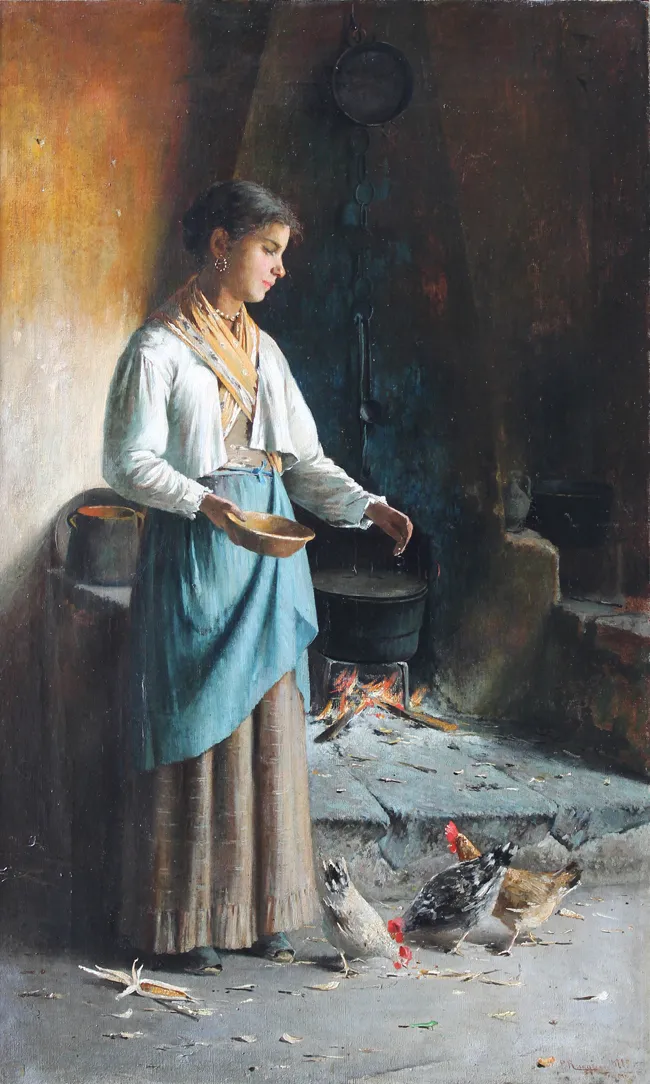
Photo: Pasquale Ruggiero, Public domain, via Wikimedia Commons
There is a phrase that appears in British food writing whenever a recipe contains beans, stale bread or a slightly bruised vegetable. It is meant as a compliment. It usually is not one.
I am talking about 'peasant food'. You will see it in recipe intros, on menus and in the kind of restaurant copy that wants to sound earthy without getting its hands dirty. It is used to signal authenticity, simplicity and a whiff of Mediterranean romance. What it often signals instead is that the writer has not thought very hard about what they are describing.
A compliment that misses the point
In Italian, cucina povera literally means the cooking of the poor. It describes a historical reality and a set of skills. It does not describe a mood. British usage tends to turn it into an aesthetic: rough bread, chipped bowl, linen cloth, a handful of beans. That can be charming. It can also imply that the food is plain because the people had no choice — that scarcity is the secret ingredient.
That is the wrong way round. The tradition is built on choice: what to preserve, what to stretch, how to make a little go a long way without making it taste like a compromise. The cook is not passive. They are inventive, thrifty and often extremely skilled. That distinction matters, because it is the difference between respecting a culture and using it as a backdrop.
Resourcefulness is not the same as deprivation
The Italian kitchen I learned from did not boast about going without. It boasted about using the whole leek. It kept the parmesan rind for soup, tore stale bread into the pot and turned a tin of chickpeas into something that felt like a proper supper. None of that was framed as poverty. It was framed as good cooking.
Cucina povera is a planning system as much as a recipe style. It asks: what needs using? What can be stretched? What flavour can be built from what is already here? It is closer to sensible household management than to a fashion. In 2026, with food bills still doing what they do and food waste firmly on the agenda, that mindset is not nostalgic. It is useful. But it is not about pretending to be poor. It is about being clever with what you have.
What it looks like in a British kitchen
You do not need a Tuscan farmhouse. A British kitchen with a tin of chickpeas, a heel of parmesan, a bunch of kale and a stale loaf is already equipped. Add leeks, carrots, celery, potatoes, cabbage, tinned tomatoes, anchovies, pasta and a decent olive oil and you have the bones of a dozen dinners.
The point is not to force British ingredients into Italian costumes. It is to let them do the same job: carry flavour, fill the table, waste nothing. British greens can stand in for cavolo nero. A good sourdough heel can do what a Tuscan loaf does. Supermarket tinned pulses are not a compromise; they are a shortcut that Italian home cooks use too. The mindset travels better than the postcard.
Three plates that prove the point
Ribollita with British greens. Stale sourdough, cavolo nero or curly kale, tinned cannellini beans, tomatoes, rosemary and a parmesan rind. The bread is not a filler. It is the body of the soup. This is not a poor dish. It is a generous one.
Pasta e ceci. Chickpeas, garlic, rosemary, small pasta and good olive oil. A British onion, carrot and celery base does the soffritto work. Finish with more oil than feels sensible and a little grated cheese if you have it.
Frittata di recupero. Leftover potatoes, leeks, greens, parsley and eggs. Dinner from the fridge, not a martyrdom. The Italian name for this kind of frittata is not a badge of hardship; it is a practical instruction to use what is there.
Retire the phrase, keep the habit
Calling this food 'peasant' does not make it more authentic. It makes it sound like a costume. If you mean the tradition, say cucina povera and explain it. If you mean the dish, describe the dish. 'Bean and bread soup with greens' tells a reader more than a label ever will.
The habit worth keeping is not the romance of scarcity. It is the discipline of resourcefulness: the rind in the pot, the bread in the soup, the leftovers turned into lunch. That is not poor cooking. It is full cooking.